Disclaimer: This is not medical advice. I am just documenting my GLP-1 journey.
Part 2 – Lifestyles of the Fit and Famous
When I first became aware of GLP-1 medications like Ozempic, it seemed like they were everywhere. I would see movie stars and people on television with stark weight loss, and there was so much buzz surrounding Ozempic and other weight-loss drugs. At first, I thought the focus was mostly on the medication itself and the dramatic results people were getting. But we also started seeing some people experience rapid weight loss that appeared to leave them with loose or sagging skin, a more pronounced or “square” facial appearance sometimes referred to as “Ozempic face,” and even gallbladder issues that experts have associated with rapid weight loss and GLP-1 medications (Catanese, 2024; He et al., 2022). More recently, some experts have also suggested that rapid weight loss may affect connective tissue and tendons, although research in this area is still developing.
So, for me, the goal is not just to lose weight, but to adjust my entire lifestyle in an attempt to mitigate some of these possible adverse effects. These lifestyle choices include developing positive and healthy food habits, eating more protein, exercising, and tapping into all of the areas that many experts suggest can support healthy, sustainable weight loss and help preserve overall health during the process.
One major concern that I learned about during rapid weight loss is the possible loss of muscle mass, especially if people are not getting enough protein or incorporating resistance training into their GLP-1 lifestyle routine. Experts now recommend prioritizing high-protein, fiber-rich, nutrient-dense foods, eating smaller and more frequent meals, staying hydrated, and engaging in regular resistance training to help maintain muscle while losing weight (Lau, 2025). All of this is on my mind as I begin Week 2 of my GLP-1 weight loss journey.
And so here I am, just like Willie Nelson, “On the Road Again.” On another weight loss journey, but somehow this time feels different. With the absence of food noise and excessive cravings dictating my food choices, I can tune in a bit more to the other, more measured voices in my head steering me toward a healthier and fitter lifestyle. I was excited to get ahead and implement my plan, taking advantage of the reduction of addictive cravings. I kept asking myself, how long will this quite last? The silence was profoundly noticeable and sometimes deafening.
Eating Smaller, Protein-Focused Meals
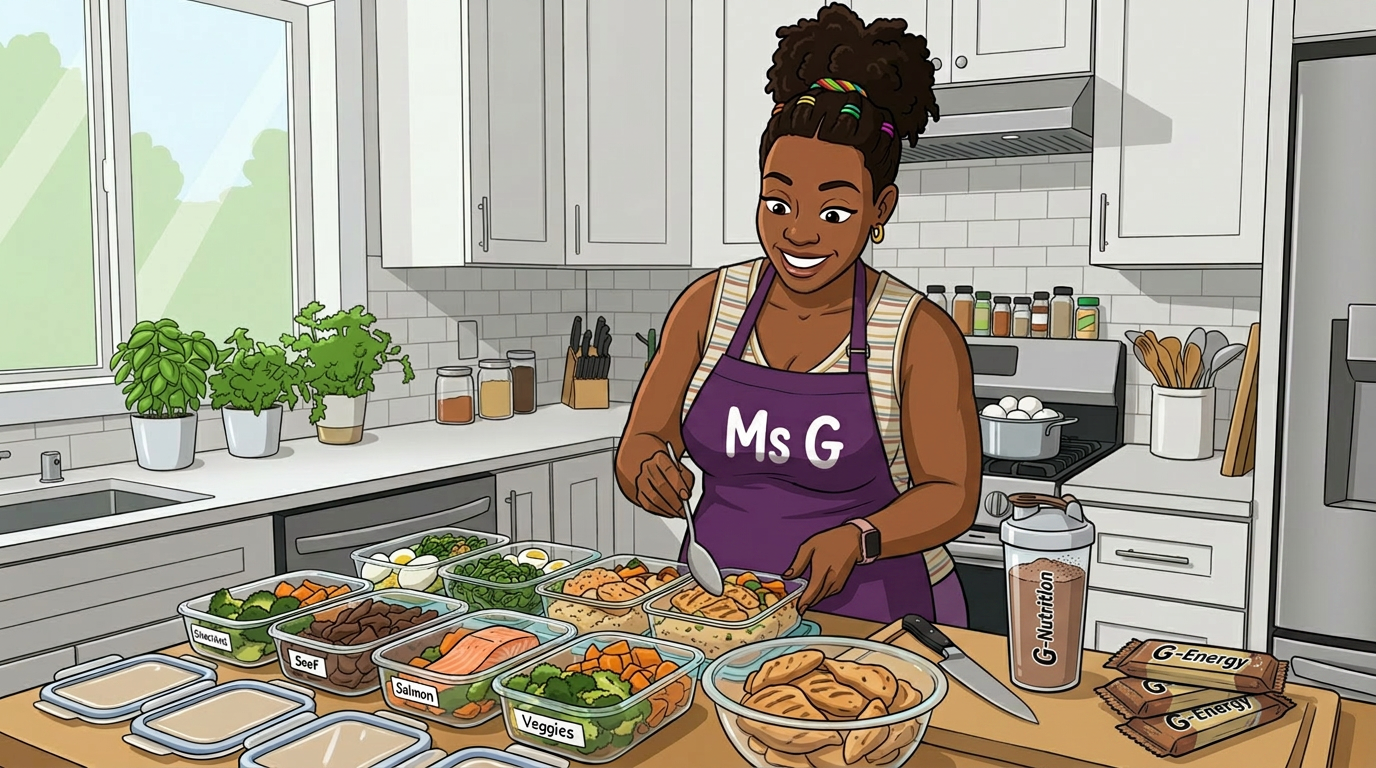
My second week of GLP-1 living felt easy. Noiseless. It was like I was doing things that I know how to do, and there weren’t any voices in my head second-guessing my eating habits or food choices. With an abundance of anxious caution and in an effort to form good habits and be consistent, I got up early on Saturday morning and meal prepped the hell out of my work lunches and home dinners. It was a habit I developed when I was intermittent fasting, except this time, I followed the suggestions of making smaller, protein-focused meals. I pulled out my old meal prep containers that had been collecting dust in my kitchen cabinet, cleaned them up, and put them back in rotation as I got back into a rhythm I hadn’t used in a while.
When I was on a longevity program, there were protein shakes I used to drink that didn’t just serve as protein, but also contained vitamins and nutrients aimed at cell repair. I decided to use this protein shake as my breakfast. I also added a green drink that I used from time to time to ensure I was getting essential vitamins, minerals and other micronutrients as a pre-breakfast drink to help me bridge any gap in micronutrients that may occur with my reduced appetite and lower food intake.
There has been a lot of chatter in the community around GLP-1 medications and weight loss, especially concerns that people may not be getting enough essential nutrients because of reduced appetite and lower overall food intake. This can sometimes lead to issues like hair thinning or hair loss over time. Experts note that rapid weight loss combined with insufficient intake of key micronutrients such as iron, vitamin D, and vitamin B12 may contribute to temporary hair shedding (telogen effluvium), especially when the body is under physical stress from calorie reduction and metabolic change (Healthline Editorial Team, 2024; Allure, 2024).
What I learned from intermittent fasting was that micronutrients were essential while fasting, and when I did not consider that, I sometimes became dizzy due to a lack of nutrients and had to incorporate electrolytes into my routine to mitigate these issues. I also wanted to make my meals convenient, nutritionally sound, and easy to track in my fitness app so I could monitor calories, macros, and micros alike. I wanted to incorporate all the best practices that I had learned and that were successful in my past attempts at structured eating.
I prepped my lunches for the week so they could be grab-and-go. I ordered chicken bites from a wholesale food warehouse, easy to portion, count calories, and log into my food app. Some containers had chicken and vegetables, others had chicken and beans. Protein shakes for breakfast, protein and fiber for lunch, and protein and vegetables for dinner, almost keto-style. I prepped everything with intention and placed meals in the refrigerator, with dinners in the freezer for nightly use after work.
All of my meals had to be ready because I was nervous that a food craving would sneak in and call me back to old favorites like crinkle-cut French fries with ketchup, hot sauce, and cheese. I needed structure to keep things aligned. I wanted my mind to develop habits of choice, choosing what is best for me and my body.
I read the fine print and did the research, probably overkill. I reviewed possible side effects like nausea and constipation associated with GLP-1 meds, followed guidance about smaller meals due to slower digestion, and increased fiber and water intake to prevent constipation. I even looked into stool softeners, as suggested in some of the YouTube content I watched, just in case.
Staying Hydrated
Next, I did some research on water intake guidelines, and honestly, the information is all over the place. Some experts suggest drinking 8 to 12 cups, or about 64 to 100 ounces of water daily, depending on body size, activity level, and overall health. So that is what I aimed for. Between my green drink, protein shake, coffee, and water intake by lunchtime, I was already close to 40 ounces of fluids. I aimed for another 20 ounces during and after dinner. I had to plan hydration carefully, and the increase in water intake meant that restroom breaks at work became part of my daily routine adjustment.
Experts emphasize that adequate hydration is especially important during weight loss, as fluid needs can increase with changes in diet, appetite, and physical activity (National Academies of Sciences, Engineering, and Medicine, 2005).
I also fine-tuned my exercise plan. I used to walk at least five times per week, but I faced some challenges after injuring my foot while helping clean out my ex-husband’s apartment after he passed away. After a gait analysis, I learned I had low arches, both feet pronated inward, and needed stability shoes to realign my gait.
Walking, rebounding, and kettlebell swings were my go-to forms of movement for mental health and conditioning. Not being able to move freely was frustrating, but I adapted. My knees ached as I adjusted to new stability shoes, but I turned to online exercise videos and found seated, bed, and floor-based workouts so I could still meet my movement goals. It wasn’t ideal, but it was something, and I was grateful for that.
So, in Week 2, I was not just collecting information anymore, I was slowly building a routine from it. These small suggestions I picked up from the GLP-1 community started to shape my day in subtle but meaningful ways. What began as research and curiosity turned into structure, and eventually into something that feels like a rhythm I am learning to live on a daily basis.
My mornings now begin with water as soon as I wake up, something simple but grounding that signals the start of the day. Not long after, I move into a green drink before work, something I added to make sure I am still getting nutrients early on. By mid-morning, coffee comes into play, but even that has shifted because I now mix in protein to help support my intake in a way that feels practical, intentional and convenient.
As the day continues, I move through protein shakes and balanced meals that are focused more on nourishment than variety. Lunch has become something I prepare ahead of time so I am not making decisions in the moment, and I have noticed that this helps me stay consistent without overthinking. After eating, I try to walk, even if it is just for a short time, because movement has started to feel like part of digestion and recovery rather than just exercise.
In the afternoon, I usually reach for something simple like a protein bar or another shake, depending on how the day is going. Dinner is structured in a similar way, focused on protein, vegetables and in particular fiber, and then I try to follow it with another short walk when I can. Hydration is something I am actively thinking about throughout the day now, and I have become more aware of how much planning it actually takes to stay consistent with my water intake.
What I am learning through all of this is that these routines are not just about weight loss. They are about creating stability in a process that feels very new and very personal. Each small choice is starting to feel like part of a larger pattern I am building for myself, one that I am still learning how to trust, and more importantly, how to be consistent with.
My Food Routine (List format)
5:00 AM – Water upon waking (8 oz)
7:00 AM – Green drink (8 oz) before work
9:00 AM – Coffee with ¼ protein shake (12 oz)
10:00 AM – Protein shake (12 oz)
12:00 PM – Prepared lunch (protein + fiber focused)
+ Water with electrolytes (20 oz) + 15-minute walk
3:00 PM – Protein bar or protein shake
6:00 PM – Keto-style dinner (protein + fiber)
+ Water (20 oz) + 15-minute walk
This Week’s Takeaways
I prepped my meals with intention and created a system that works for me, grab-and-go lunches, planned dinners, and structured nutrition built around protein, fiber, and micronutrients. I am being proactive instead of reactive. I adjusted my movement instead of giving up on it. Even though I difficult to move around like I used to, I sought out and discovered alternatives that still allowed me to show up for myself physically.
I’m learning to create an all-around lifestyle by supporting my GLP-1 medication intake with expert-based suggestions like hydration, smaller meals, fiber, planning, and consistency. This time, my weight loss journey feels different because there is noiseless clarity. There is no constant second-guessing. I’m learning that although the food noise is reduced, I still have to show up with intention, structure, and a planned lifestyle. And even when things don’t go as planned, like my foot injury, I can adjust without quitting.
Maybe the biggest lesson is this: I don’t have to do this perfectly. I just have to keep going.
Thanks, Ms. G.
Some Helpful Resources I Learned From (For Informational Purposes Only)
I Am Taking A GLP1 Weight-Loss Medication, What Should I Know?
Diet, Exercise Is Still Important When Taking Weight-Loss Medication
Taking A GLP-1? Here Are Foods to Limit — And What to Prioritize
Protein Is the Missing Piece in your GLP1 Journey!
20 Protein Picks Behind Our 150 lb GLP-1 Weight Loss
References
Allure Magazine. (2024). Why some people are experiencing hair loss on GLP-1 medications. Allure. https://www.allure.com/story/glp-1-hair-loss
Catanese, L. (2024, February 5). GLP-1 diabetes and weight-loss drug side effects: “Ozempic face” and more. Harvard Health Publishing. https://www.health.harvard.edu/staying-healthy/glp-1-diabetes-and-weight-loss-drug-side-effects-ozempic-face-and-more
Downsized. (2026, April 30). GLP-1 muscle loss panic is wrong (Here’s the new research) [Video]. YouTube. https://youtu.be/X-LOt_uuvGo
He, L., Wang, J., Ping, F., Yang, N., Huang, J., Li, Y., Xu, L., Li, W., & Zhang, H. (2022). Association of glucagon-like peptide-1 receptor agonist use with risk of gallbladder and biliary diseases: A systematic review and meta-analysis of randomized clinical trials. JAMA Internal Medicine, 182(5), 513–519. https://doi.org/10.1001/jamainternmed.2022.0338
Healthline Editorial Team. (2024). Can you take supplements while on GLP-1 medications like Ozempic? Healthline. https://www.healthline.com/health/drugs/supplements-while-taking-glp-1s
Healthline Editorial Team. (2024). Nutrient deficiency risk with Wegovy and Zepbound and similar weight-loss drugs. Healthline. https://www.healthline.com/health-news/nutrient-deficiency-risk-wegovy-zepbound
Lau, J. (2025, August 28). Diet, exercise still important when taking weight-loss medication. Harvard T.H. Chan School of Public Health. https://hsph.harvard.edu/news/diet-exercise-still-important-when-taking-weight-loss-medication/ (hsph.harvard.edu)
National Academies of Sciences, Engineering, and Medicine. (2005). Dietary reference intakes for water, potassium, sodium, chloride, and sulfate. National Academies Press. https://doi.org/10.17226/10925
Leave a Reply